
Oh, how we obsess over the smallest details in our books. It all needs to feel cohesive to readers.
But does it really? Readers will probably never notice whether a flagon of mead costs more or less than a mug of ale, and if they do notice, they won’t care. But if someone spends a gold piece on a bowl of stew at the local tavern and a masterwork sword for a gold piece ten pages later, they’ll notice. That’s just too imbalanced.
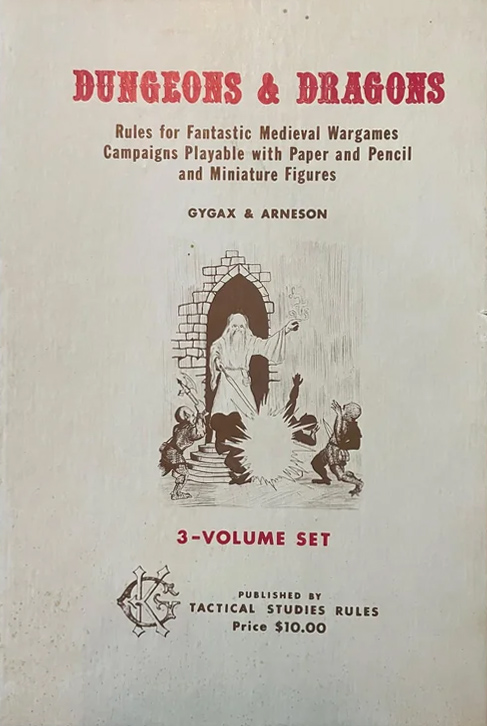
Although The Bounds of Magic was my first fantasy novel, it was far from being my first experience with world building. I started playing Dungeons and Dragons long, long ago, when the rules were three little booklets in a small white box. I started running my own games when I started college in 1976.
I drew my own maps, created my own NPCs (non-player characters), built my own monsters, created pantheons of gods, designed governments, and structured guilds. All of this was very useful when it came time to create the land of Tryllevær for my books. But there were some things that I never had to worry about because the rules were already baked in to the gaming system, whether it was D&D, Pathfinder, or some other TTRPG. Among those were magic systems (which will be the subject of another article) and money.
Being in a roughly medieval setting, there’s no paper money, much less credit cards and crypto. Everything is done with coins. Most of them use a pretty simple standard.
10 copper pieces = 1 silver piece
10 silver pieces = 1 gold piece, and some add
10 gold pieces = 1 platinum piece
Simple and straightforward. Figuring out what one of those coins will buy you, on the other hand, is not so simple. Does a meal at a nice tavern cost as much as a basic longbow? Does a horse cost more than a masterwork dagger? How much do people tip a bard?
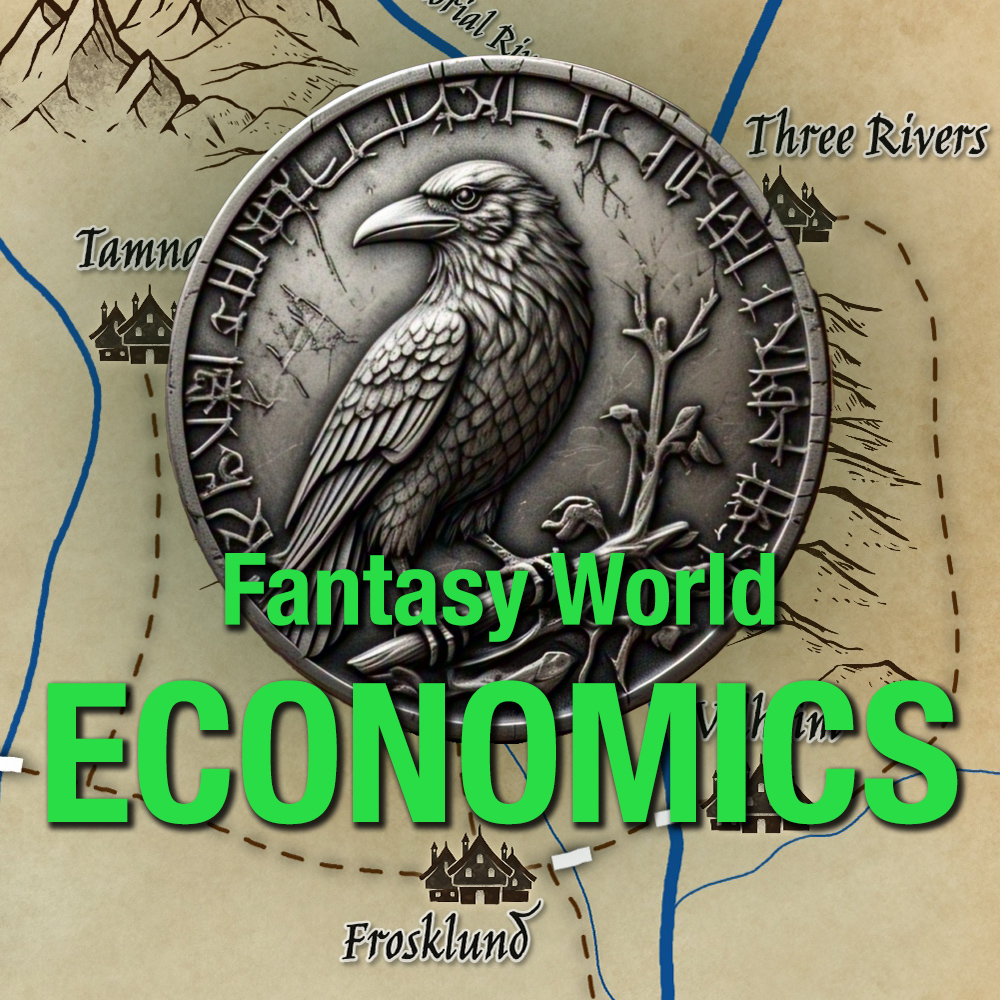
And then you get into naming of the currency and denominations of the coins. I went with a silver Raven as the base unit, with coins worth a half, a quarter, and an eighth of a Raven. Because large amounts of coinage get really heavy, I ended up adding a gold Eagle coin worth 20 Ravens.
What will your money buy?

There are many, many websites out there that explore what things cost in feudal times, and many others designed for fantasy game masters. Use them. Adapt them to your system. But face the fact that you’re sometimes going to have to make stuff up. Can the denizens of your world purchase highly-trained flying dwarf crocodiles? You may not have to figure out the exact price, but you’ll need an estimate. Can they trade a wagon and two horses for a guard-croc? Or will they have to sell their house?
You can develop a semi-realistic well-designed system of commerce without making your book read like a treatise on economics. One way is to keep it ambiguous, saying “he handed the bartender a coin” without specifying what coin it was. Or, “the bard did well in tips the night before, so he bought the first round of drinks tonight.”
When you need to figure comparative values, start with cost of living estimates. What does it cost a peasant to get food, lodging, and other necessities for a month? How about a professional, like a seamstress, a shopkeeper, or a blacksmith?
Let’s say your monetary unit is the flersh, and it costs a guild member 10 flershes a day for basic living expenses like clothing, food, and home/shop upkeep. And let’s assume a bladesmith can make a high-quality dagger in a couple of days. That dagger had better make a profit of at least 20 flershes, or the bladesmith can’t make a living. Throw in some profit and figure the cost of goods, and you can set a typical price of 25 or 30 flershes. A quick & dirty throwing knife might be a quarter of that, and a top-notch sword could take a couple of weeks, so it might sell for around 200 flershes.
Where does stuff come from?
Where do the denizens of your world get their food? Sure, there’s a bakery in town, but where does their flour come from? Is there farmland filled with grains near town or do they have to import it? What about vegetables? A very small village in a lush environment might get by on meat provided by hunters, but that’s not scalable. Will your characters walk by pastures filled with cows, sheep, goats, or your world’s version of meat-beasts? Or is it a vegetarian society?
How about clothing? Where do the raw materials come from? Again, are there fields of flax plants for linen and pastures full of cows for leather and sheep for wool? Do they cultivate silkworms or make cloth from bamboo? If clothing has to be imported (from where?) it will be more expensive. If there’s a clothier in town, do they buy raw cloth and dye it themselves? Where does the dye come from?
Does your world offer classic tavern drinks like ale, mead, and wine? Then somebody, somewhere, is growing barley and hops, cultivating bees for honey, and growing grapes (or other fruits). The relative prices of these drinks will be based on their scarcity. Perhaps you’ll introduce drinks particular to your world. Just casually mention that this town is known for its alpine snakeroot, which is fermented to make the best darned withiwob on the continent!
I could go on and on, but I don’t want to tempt you to answer these questions with an infodump in the book. This kind of information can be dribbled out in bits and pieces to make your world—and your economy—feel more real. Describe a hillside dotted with sheep near the town known for its great cheese. Have your protagonist grumble about the cost of mead going up because a recent fire killed off a lot of the local bees. When a character is admiring a particularly nice sword, have someone point out where the steel came from or what kind of wood was used for the hilt.
Those little details make a huge difference.
How much will readers care?
When I sent out drafts of The Bounds of Magic to my beta readers, it included an innocuous description of a coin the protagonist was using: “It was a small copper coin called an eighth because eight of them made up one silver Raven, named for the Raven Kings of Tryllevær.”
One of the readers crossed it out, saying essentially that nobody cares.
Another reader asked for elaboration. Who are these Raven Kings? Are they still ruling? What’s the system of government here, anyway?
Some readers really like extensive background, but only on the things that interest them. One might want to know about the history of the realm. Another might want ten pages of detail about the protagonist fletching arrows.
This is your dilemma. If you drop bits of info like this, some readers will want more (much more!), and others won’t see the relevance to the story, viewing it as a distraction. In this case, I felt the second group was probably larger and I dropped the reference. Hopefully, anyone who cares about the currency structure in Tryllevær is reading this article!
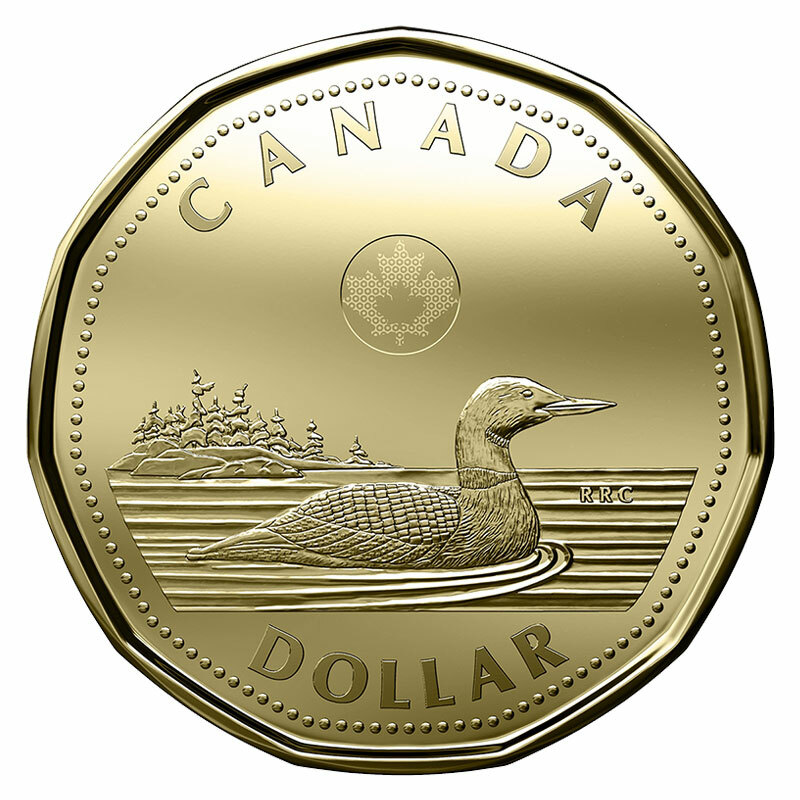
Why isn’t this one of the important little details that adds richness to the book? Look around the world we live in. How often do we talk about whose picture is on the front of a coin or why a five-cent coin in the U.S. is called a nickel and a dollar coin in Canada is called a loonie? Unless it ties in with something else in your plot or character development, this just isn’t a detail that matters.
After putting in a huge amount of work to develop your world’s economy, it’s oh-so-tempting to infodump the whole thing into the book. While Herman Melville can get away with spending a third of his book telling you more than you ever wanted to know about whales and whaling, that’s not what modern readers are looking for.
It’s far better to luxuriate in the knowledge that you’ve created a consistent economy for your world than to bore your readers with much more than they really want to know. Your writing will be smoother with your cheat sheet that has all the economic details on it because you won’t have to stop and ponder the values of things all the time. You’ll have it worked out in advance.

