It’s been a while since I’ve done a brand-new book in the Who Pooped in the Park series. We’ve been putting out new editions of the older books with fresh illustrations by Robert Rath, and there’s a Spanish-language edition in the works for the Sonoran Desert book, but no all-new books for a while.
Today, however, I’m excited to announce that I just signed the contract with Farcountry Press for my 21st Who Pooped in the Park book! It’s the first all-new book in the series since Who Pooped in Central Park. This one will cover three (count em! three!) parks in one book:
- Badlands National Park in South Dakota
- Theodore Roosevelt National Park in North Dakota, and
- Makoshika State Park in Montana
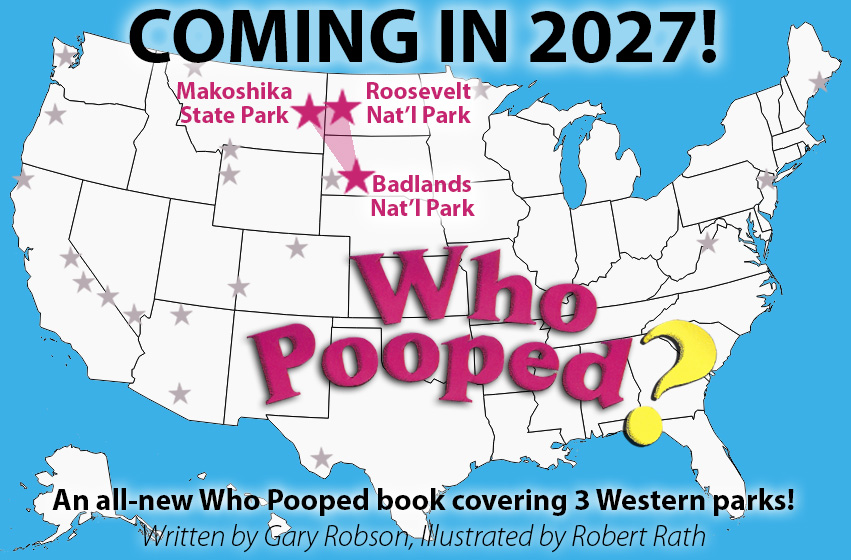
It will be illustrated by Robert Rath (as usual). I don’t have a release date yet, but I’m hoping for a book launch tour next summer!
Badlands National Park (South Dakota)
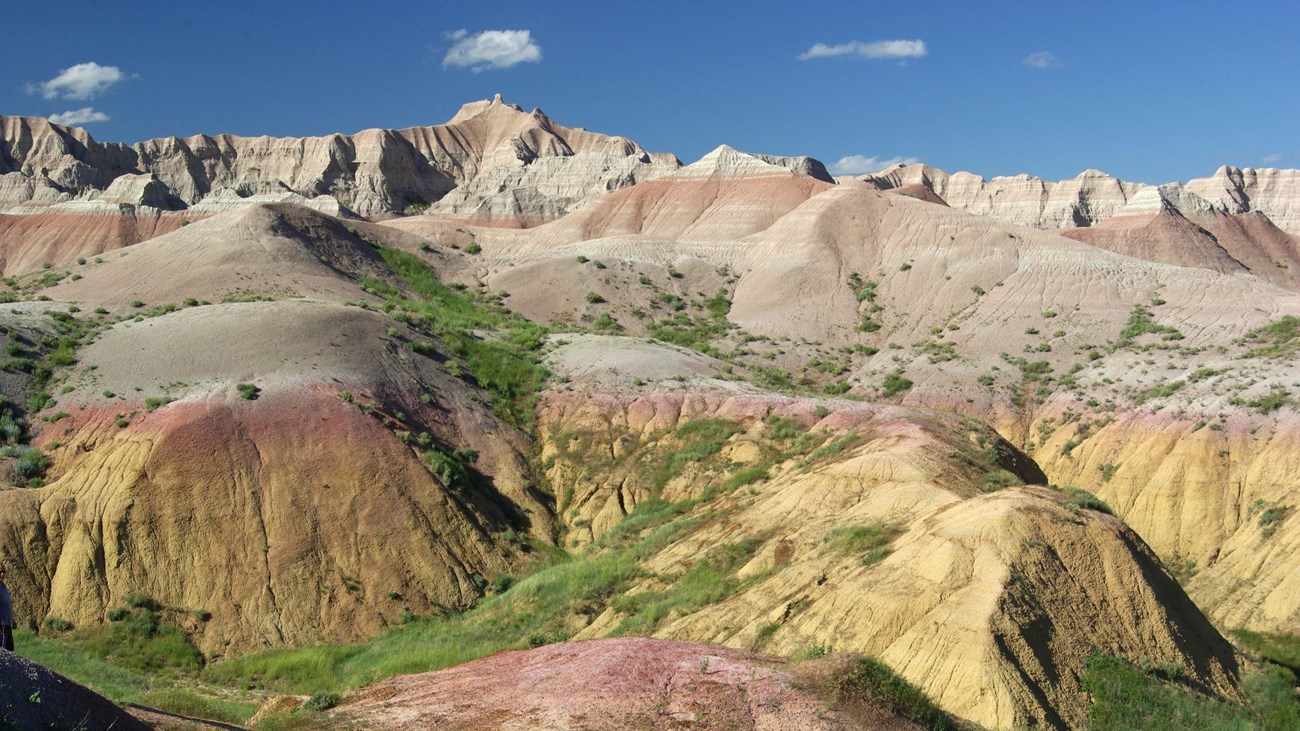
Badlands was established as a National Monument in 1939 and became a National Park in 1978. It’s east of Mount Rushmore (which is covered in Who Pooped in the Black Hills), and about 50 miles from Rapid City, South Dakota.
The park covers 243,000 acres and receives about a million visitors per year. It covers an area that was originally hunting grounds for the Lakota, and lies just north of the Pine Ridge Reservation.
Among the animals our intrepid explorers might find in the park are bison, pronghorns, bighorn sheep, deer, foxes, coyotes, mountain lions, bobcats, badgers, skunks, raccoons, rattlesnakes, many species of eagles & hawks, and a huge variety of smaller animals.
Theodore Roosevelt National Park (North Dakota)
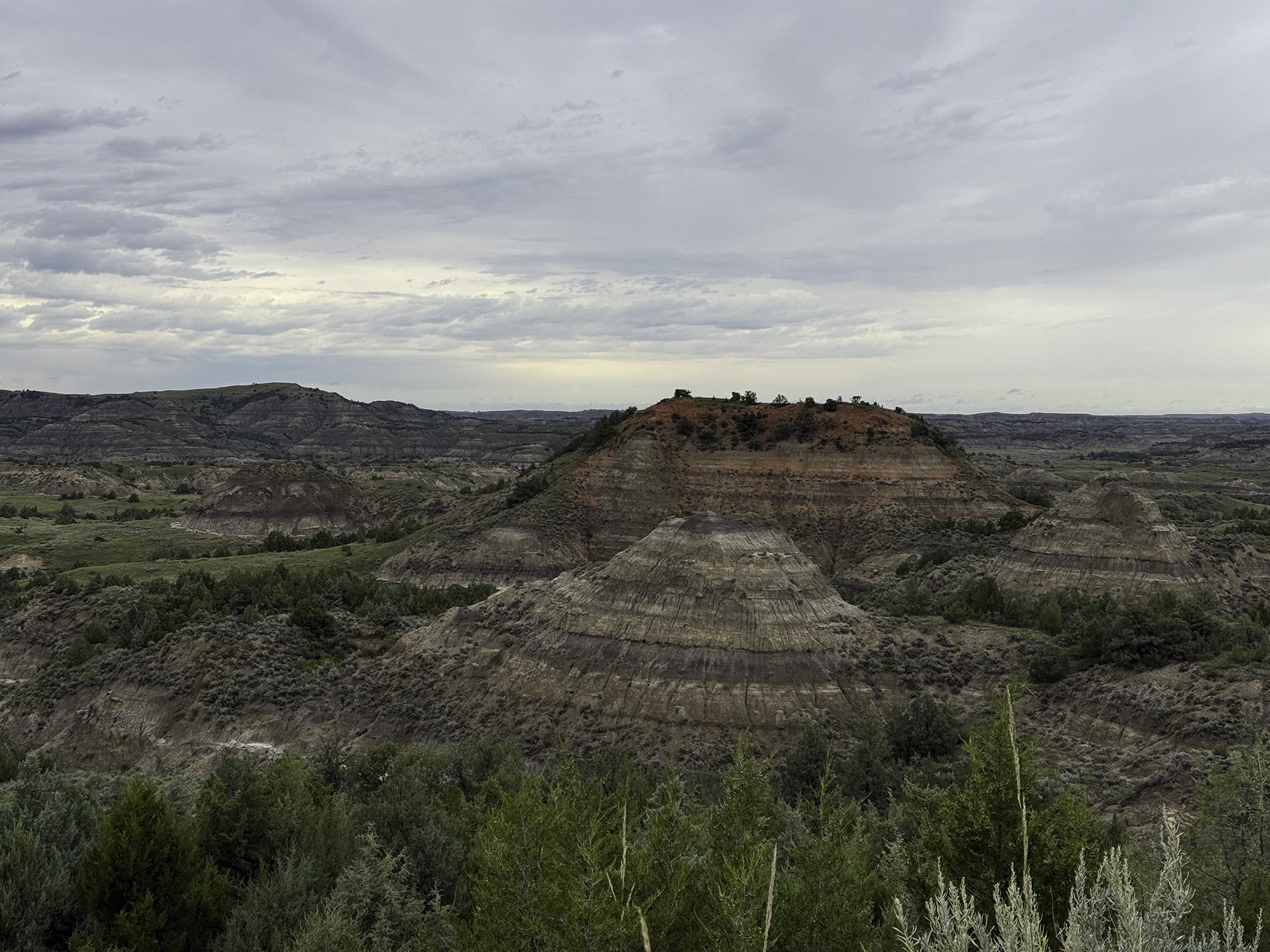
Named for our 26th President, Theodore Roosevelt National Park was established in 1978, the same day Badlands became a National Park.It’s noticeably smaller, at 70,000 acres, and gets about 2/3 the visitors Badlands gets.
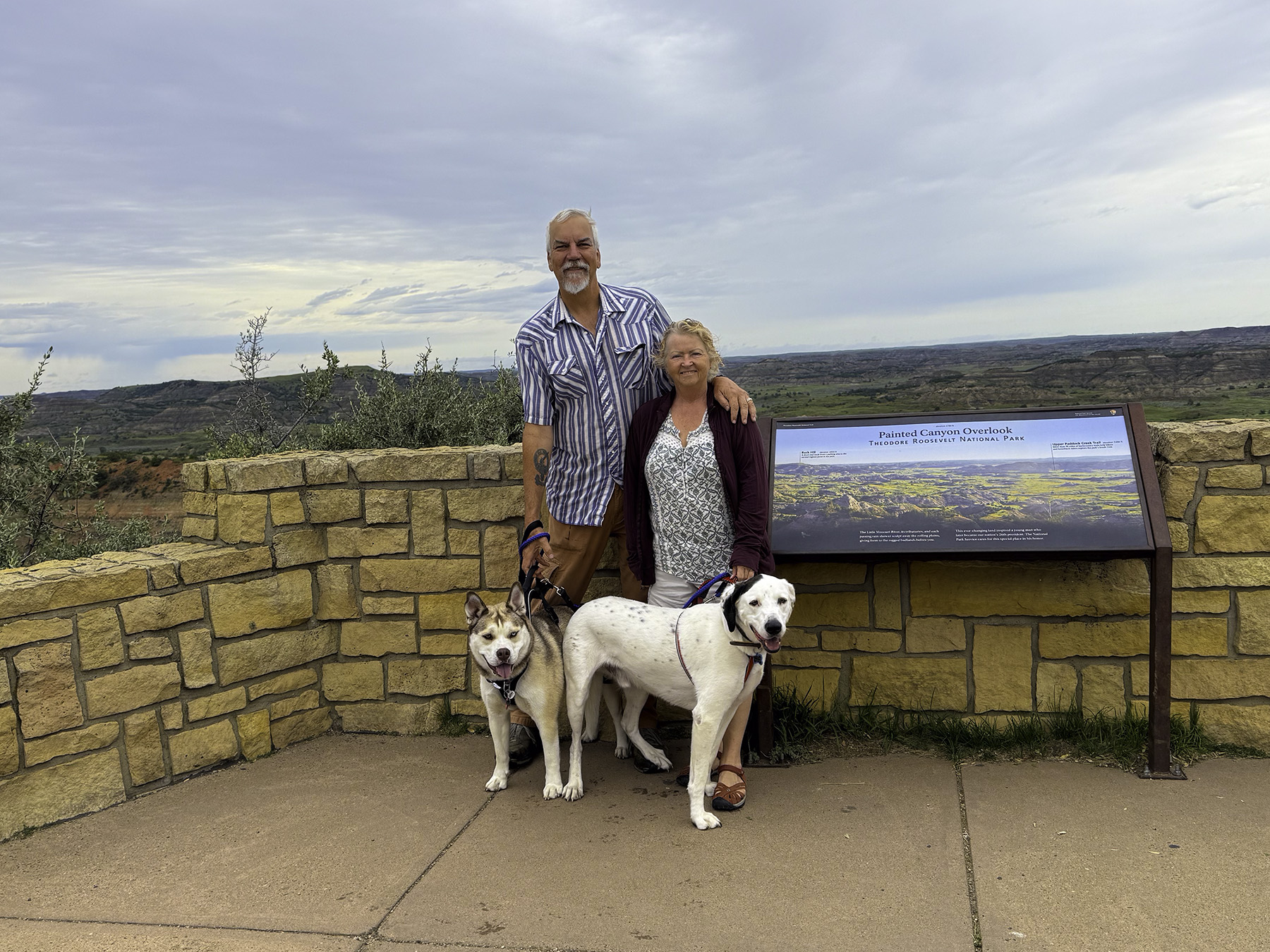
The park is about 220 miles NNW of Badlands, just west of Dickinson, North Dakota, about 25 miles from the Montana border. This book will be the first in my Who Pooped series to cover any part of North Dakota! The trails within the park border don’t allow dogs, but we found a lot of great places to walk our dogs along roads, by campgrounds, and outside the park.
There are plenty of animals in the park, ranging from large critters like bison, wild horses, and elk to small ones like prairie dogs — and where you find prairie dogs, you’ll find coyotes and badgers. There are also snakes, lizards, turtles, and over 186 species of birds!
Makoshika State Park (Montana)
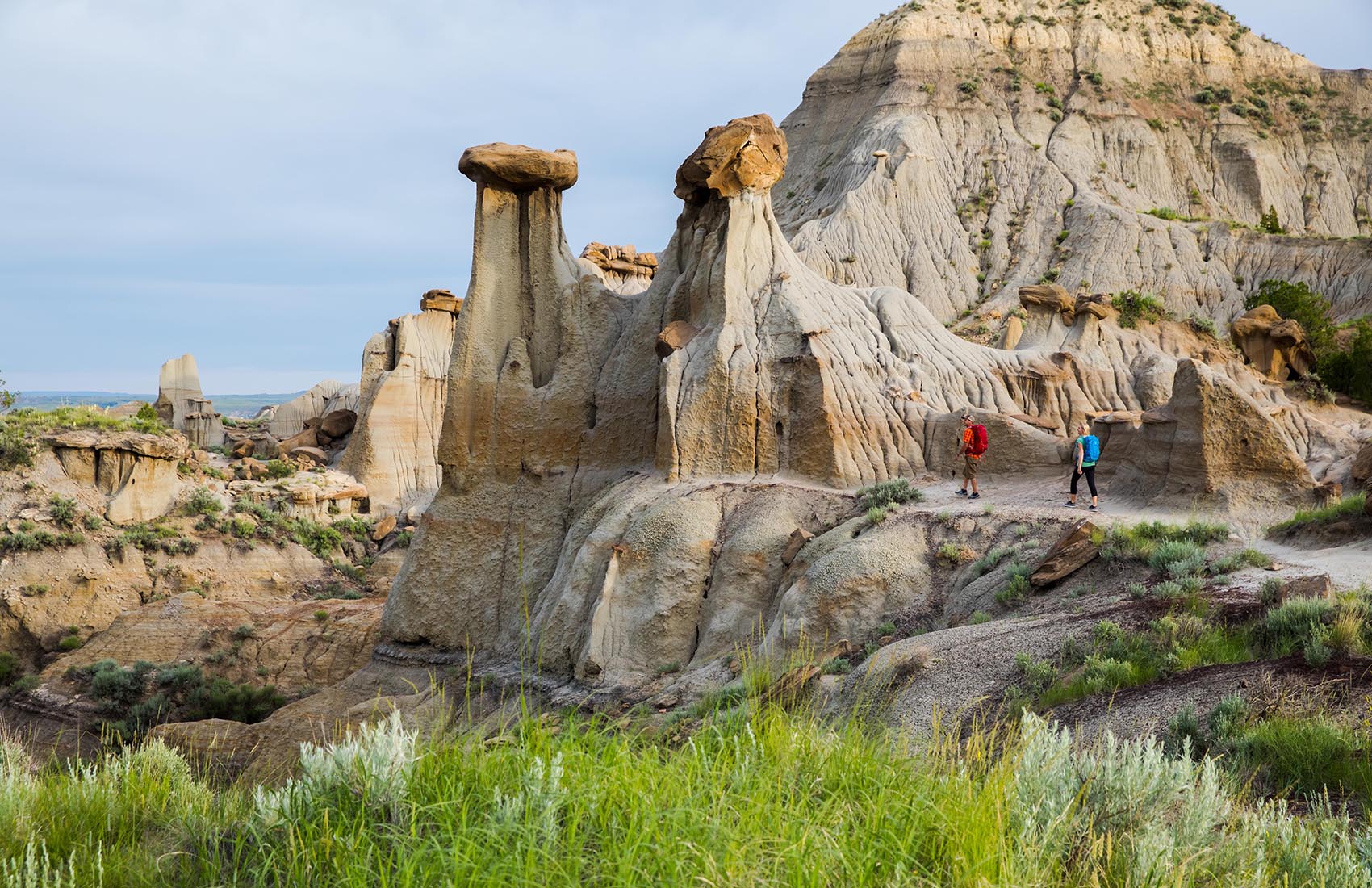
About 60 miles west of Roosevelt National Park, near Glendive, we’ll find Montana’s Makoshika State Park. Its name comes from the Lakota words Mako sica, which literally means “bad land.” It’s the largest state park in Montana, and includes not only stunning scenery, but a top-notch fossil bed as well. There are a lot of interpretive displays in the visitors center, including a triceratops and a tyrannosaurus rex.
The park was established in 1953, covers over 11,000 acres, and gets about 90,000 visitors per year. Lewis and Clark camped there—Clark’s journal referred to the area as the “birnt hills.”
Although deer and (rarely) mountain lions can be spotted in the park, it’s better known for birds, like the mountain bluebirds and turkey vultures that return to the park to breed every year. It is also a great spot to see both golden and bald eagles.
Three for the price of one
This isn’t the first one of my books to cover multiple parks. The Cascades book, for example, includes four national parks (Lassen, Crater Lake, North Cascades, and Mt. Ranier), two national recreation areas (Ross Lake and Lake Chelan), a national forest (Mt. Hood), and two national monuments (Oregon Caves and Mount St. Helens).
Even though Badlands, Roosevelt, and Makoshika are spread out over three states and a span of almost 250 miles, they have similar ecosystems. The animals, geology, and features aren’t identical, of course, but they’re close enough to make a cohesive book out of the three parks.
If you’d like to follow the progress on the new book, just scroll to the bottom of this page and subscribe to my blog.