

Getting started in home automation was exciting. It was also extremely frustrating.
Smart home devices have been around for quite a while now. A few years ago I was under the mistaken impression that the technology had stabilized. Far from it! Apple, Amazon, Samsung, and Google each had their own ecosystems, which they didn’t want anyone else playing in.
Device manufacturers all created apps for controlling their devices. Unless you wanted to end up with a dozen different apps and a bunch of devices that couldn’t talk to each other, you were out of luck. Slowly, manufacturers began making their devices work with one or more of the ecosystems. This was painful for them because they had to write each interface three or more times. It was painful for us because features that worked in the proprietary apps might or might not work with HomeKit or Alexa.
Terminology issues didn’t help. I bought a box of Feit smart light bulbs that had the words “Works with Siri” on the box. It turns out that Feit had an app for iPhones, and Siri could send commands to the app, but HomeKit (also called Apple Home) couldn’t communicate with the bulbs at all. I couldn’t add them to HomeKit scenes or make HomeKit shortcuts that checked whether the bulbs were on or off. I still have a box of those 2-year-old Feit bulbs in my garage. Anyone need them?
Then came Matter.

In October of 2022, version 1 of a new standard was released. Apple, Amazon, Google, Samsung, and a plethora of device manufacturers came to an agreement on a standard interface for smart plugs, switches, lights, door locks, thermostats, blinds, sensors, TVs, and more.
This meant that a company making light bulbs no longer had to write their interface firmware four times. If they made a Matter-compatible light bulb, it would work with any of the home hubs. But change comes slowly. Even now, almost two years later, many companies haven’t updated their older products to be Matter compatible.
Since then, three updates to the Matter standard have come out. The most recent, Version 1.3, was last month (May 8, 2024). The original list of device types has been expanded to include things like refrigerators, dishwashers, smoke and CO alarms, microwaves, ovens, and more. Their plan is to roll out updates twice per year, adding even more functionality.
What does this mean to someone with an Apple smart home?

First, it means you have two different logos to look for on product boxes. Anything that says “Works with Apple Home” or “Matter” will work with your Apple home ecosystem directly. You can fire up Apple Home, tell it to add a device, and connect your new product alongside all of your other devices.
It also means that information flows both ways. You can create automations that sense a door opening and turn on a light. Or automations that sense a light turning off and lock the door.
Apple doesn’t yet fully support all of the device types and their options, but buying Matter still makes sense. As updates to Apple Home come out, more and more devices will work with it. Buy a Matter certified microwave oven, and even though you’ll have to use the manufacturer’s app today, you know that at some point you’ll be able to tie it in to your Apple Home.
What Matter doesn’t do
To run your Apple-based smart home, you’ll still need to have one or more hubs. Matter doesn’t replace the functionality of a HomePod or Apple TV. Instead, Apple has made HomePods and Apple TVs into Matter controllers, so they act both as a central controller for all of your Matter devices and a hub for your native Apple Home devices.
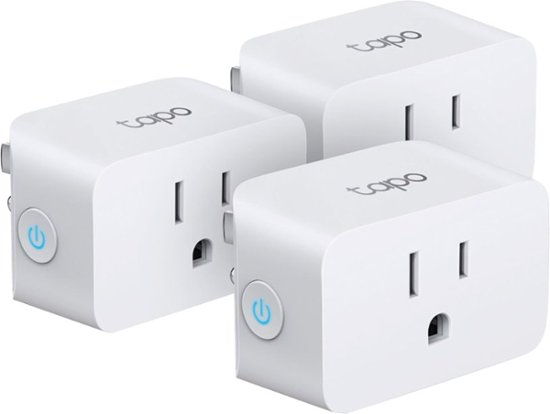
Matter also doesn’t guarantee that every device will support every function. As an example, I bought some Matter smart plugs last year. They paired smoothly with Apple Home. I was able to create controls to turn the plugs on and off, and automations that took action based on the state of the plug. Apple Home supports dimmers and Matter 1.3 supports energy monitoring, but that doesn’t mean these particular smart plugs are capable of dimming or energy monitoring.
Support will be coming in stages. Don’t expect Matter to solve all of your problems overnight, but having over 100 different companies all work together to create a standard definitely makes a difference.
Or should I say … Matter definitely matters.
 Gary D. Robson